
Cosmetic
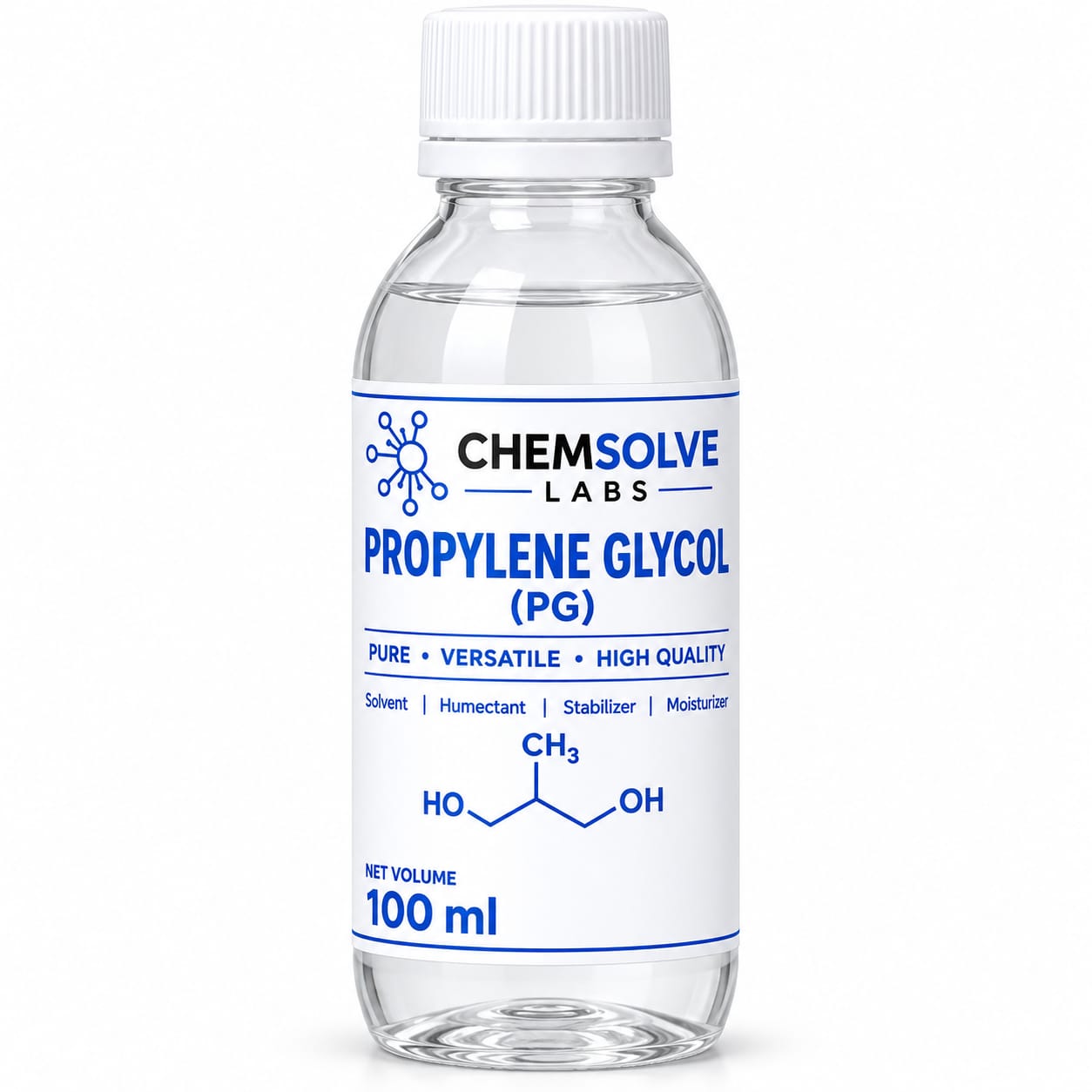
Propylene glycol (PG)
Propylene Glycol is a versatile, water-soluble organic compound widely used in cosmetic, pharmaceutical, personal care, and industrial formulations. It functions primarily as a humectant, solvent, skin-conditioning agent, and viscosity modifier.
Rs. 750
Shipping Rs. 300 per pack.
Information about Propylene glycol (PG)
❓ What Is Propylene Glycol
Propylene Glycol is a versatile, water-soluble organic compound widely used in cosmetic, pharmaceutical, personal care, and industrial formulations. It functions primarily as a humectant, solvent, skin-conditioning agent, and viscosity modifier.
In cosmetic formulations, Propylene Glycol helps attract and retain moisture, keeping skin hydrated and improving product application. It also acts as an effective solvent for dissolving various active ingredients, botanical extracts, fragrances, and other formulation components.
Due to its excellent compatibility with water and many organic ingredients, Propylene Glycol is commonly incorporated into creams, lotions, serums, shampoos, conditioners, facial cleansers, and other personal care products.
🧬 Chemical Structure and Properties
Propylene Glycol is a simple aliphatic diol containing two hydroxyl (-OH) groups attached to a three-carbon chain.
Chemical structure:
CH₃–CH(OH)–CH₂OH
Chemical Properties:
Property Details
INCI Name Propylene Glycol
Chemical Name Propane-1,2-diol
CAS Number 57-55-6
EC Number 200-338-0
Molecular Formula C₃H₈O₂
Molecular Weight 76.09 g/mol
Chemical Structure CH₃–CH(OH)–CH₂OH
Appearance Clear, colorless liquid
Odor Nearly odorless
Solubility Miscible with water
Density Approximately 1.04 g/cm³ at 20°C
Boiling Point Approximately 188°C
Melting Point Approximately -59°C
Chemical Nature Hydrophilic diol
pH Not applicable to pure material
Key Chemical Properties:
• Excellent water solubility.
• Hygroscopic nature (absorbs moisture).
• Low volatility.
• Good solvent properties.
• Compatible with many cosmetic ingredients.
• Stable under normal storage conditions.
🏭 Uses in the Cosmetic Industry
Propylene Glycol is widely used in different cosmetic and personal care applications.
1. Skincare Products
• Facial moisturizers.
• Hydrating serums.
• Anti-aging creams.
• Facial cleansers.
• Sunscreens.
• Aloe vera gels.
• Body lotions.
2. Haircare Products
• Shampoos.
• Hair conditioners.
• Hair masks.
• Hair serums.
• Leave-in conditioners.
• Hair styling products.
3. Personal Care Products
• Liquid hand washes.
• Shower gels.
• Body washes.
• Liquid soaps.
• Shaving products.
• Deodorants.
4. Decorative Cosmetics
• Foundations.
• Concealers.
• Mascara.
• Liquid makeup.
• Lip care products.
5. Fragrance Products
• Fragrance solubilization.
• Perfume formulations.
• Body sprays.
• Fragrance-based cosmetic products.
🔑 Key Features
• Excellent moisture-retaining properties.
• Effective humectant for skin hydration.
• Multifunctional cosmetic solvent.
• Helps dissolve various active ingredients.
• Improves ingredient distribution.
• Compatible with water-based formulations.
• Low volatility.
• Helps improve product application.
• Suitable for skincare and haircare products.
• Useful in both aqueous and selected hydroalcoholic systems.
🔬 Description
Propylene Glycol is a multifunctional cosmetic ingredient used to improve the performance, stability, and application properties of personal care formulations. Its two hydroxyl groups provide strong affinity for water, making it an effective humectant that helps maintain moisture in cosmetic products.
As a solvent, it helps dissolve ingredients that may have limited solubility in water. It also improves the distribution of active ingredients and botanical extracts throughout formulations.
Propylene Glycol is particularly valuable in skincare and haircare manufacturing because it combines moisture retention, solvent functionality, and formulation flexibility in a single ingredient.
📊 Technical Data
Parameter Typical Specification
Product Name Propylene Glycol
INCI Name Propylene Glycol
CAS Number 57-55-6
EC Number 200-338-0
Grade Cosmetic Grade
Appearance Clear, colorless liquid
Purity Typically ≥99.5% (grade-dependent)
Assay 99.5–100.5% (supplier-dependent)
Molecular Formula C₃H₈O₂
Molecular Weight 76.09 g/mol
Density at 20°C 1.035–1.040 g/cm³
Boiling Point Approximately 188°C
Water Solubility Completely miscible
Odor Nearly odorless
Function Humectant, solvent, skin conditioning
Storage Cool, dry, sealed container
Technical specifications are indicative. Always verify purity, water content, acidity, and other parameters against the supplier's COA and TDS.
🧪 Recommended Usage
Recommended concentrations depend on the product type, formulation requirements, and desired performance.
Application Recommended Usage
Facial Serums 2–5%
Moisturizing Creams 2–5%
Body Lotions 2–5%
Facial Cleansers 1–5%
Aloe Vera Gels 2–5%
Shampoos 1–5%
Hair Conditioners 1–5%
Hair Serums 1–5%
Shower Gels 1–5%
Sunscreen Formulations 2–5%
Deodorants 1–5%
Fragrance Products Formulation-dependent
These are suggested formulation starting ranges, not regulatory maximum limits.
💡 Pro Tip
For better formulation performance, add Propylene Glycol during the water-phase preparation.
Recommended incorporation procedure:
1. Measure the required quantity of Propylene Glycol.
2. Add it to the water phase under moderate mixing.
3. Mix until completely uniform.
4. Add water-soluble active ingredients or extracts.
5. Continue with the remaining formulation process.
6. Check the final pH, appearance, viscosity, and stability.
Formulation tip: Propylene Glycol can also be used to pre-dissolve certain cosmetic ingredients before adding them to the main batch.
For example, it can help incorporate selected botanical extracts and water-compatible cosmetic actives.
👩🔬Skin Type Suitability
Propylene Glycol can be used in formulations designed for different skin types.
Skin Type Suitability
Normal Skin Suitable
Dry Skin Suitable
Oily Skin Suitable
Combination Skin Suitable
Sensitive Skin Requires careful evaluation
Mature Skin Suitable
Important: Although Propylene Glycol is widely used in cosmetics, some individuals may experience irritation or allergic contact dermatitis. Sensitive-skin products should be properly evaluated.
🧴 Formulation Ideas
1. Hydrating Facial Serum
Ingredient Percentage
Distilled Water 90.0%
Glycerin 3.0%
Propylene Glycol 3.0%
Niacinamide 2.0%
Preservative 1.0%
Xanthan Gum 0.3%
Other additives 0.7%
Total 100%
2. Moisturizing Body Lotion
Ingredient Percentage
Distilled Water 72.0%
Glycerin 3.0%
Propylene Glycol 3.0%
Emulsifying Wax 5.0%
Cetyl Alcohol 2.0%
Caprylic/Capric Triglyceride 8.0%
Shea Butter 3.0%
Dimethicone 1.0%
Preservative 1.0%
Other additives 2.0%
Total 100%
These are educational starting formulations. Preservative efficacy, emulsifier compatibility, pH, and stability must be tested before commercialization.
💧 Safety and Regulatory:
Propylene Glycol is widely used in cosmetic, pharmaceutical, and food applications.
Safety considerations:
• Generally suitable for cosmetic use at appropriate concentrations.
• May cause irritation in some sensitive individuals.
• Avoid direct contact with eyes.
• Use cosmetic-grade or pharmaceutical-grade material.
• Evaluate compatibility with other formulation ingredients.
• Conduct skin compatibility testing for finished products.
Regulatory information:
Region Regulatory Information
USA Used in cosmetic products subject to applicable FDA requirements.
European Union Permitted for cosmetic use subject to EU Cosmetics Regulation requirements.
UK Used in cosmetics subject to applicable UK cosmetic regulations.
Pakistan Follow applicable local cosmetic and product safety requirements.
INCI Propylene Glycol
CAS 57-55-6
The Cosmetic Ingredient Review (CIR) Expert Panel concluded that Propylene Glycol is safe for cosmetic use under the assessed conditions when formulated to be non-irritating.
❓ FAQs
1. What is the main function of Propylene Glycol in cosmetics?
It primarily functions as a humectant, solvent, and skin-conditioning agent.
2. Is Propylene Glycol a moisturizer?
It is a humectant that attracts and retains moisture, helping improve skin hydration.
3. Is Propylene Glycol water-soluble?
Yes. It is completely miscible with water.
4. Can Propylene Glycol be used in shampoo?
Yes. It can help dissolve ingredients, improve moisture retention, and support ingredient distribution.
5. What is the difference between Propylene Glycol and Glycerin?
Both are humectants, but Propylene Glycol generally provides stronger solvent functionality, while Glycerin is primarily valued for its moisture-binding properties.
6. Can Propylene Glycol dissolve active ingredients?
Yes. It can dissolve various cosmetic ingredients, depending on their individual solubility.
7. Is Propylene Glycol safe for sensitive skin?
It is widely used in cosmetics, but some individuals may experience irritation or contact allergy.
8. What is the recommended concentration?
A common starting range is 1–5%, depending on the formulation.
9. Can Propylene Glycol replace Glycerin?
It can partially or completely replace Glycerin in certain formulations, but the final texture, hydration, and sensory performance may differ.
10. Does Propylene Glycol work as a preservative?
No. Although it may contribute to microbial control at sufficiently high concentrations, it should not be relied upon as the primary preservative in normal cosmetic formulations.
You may also like
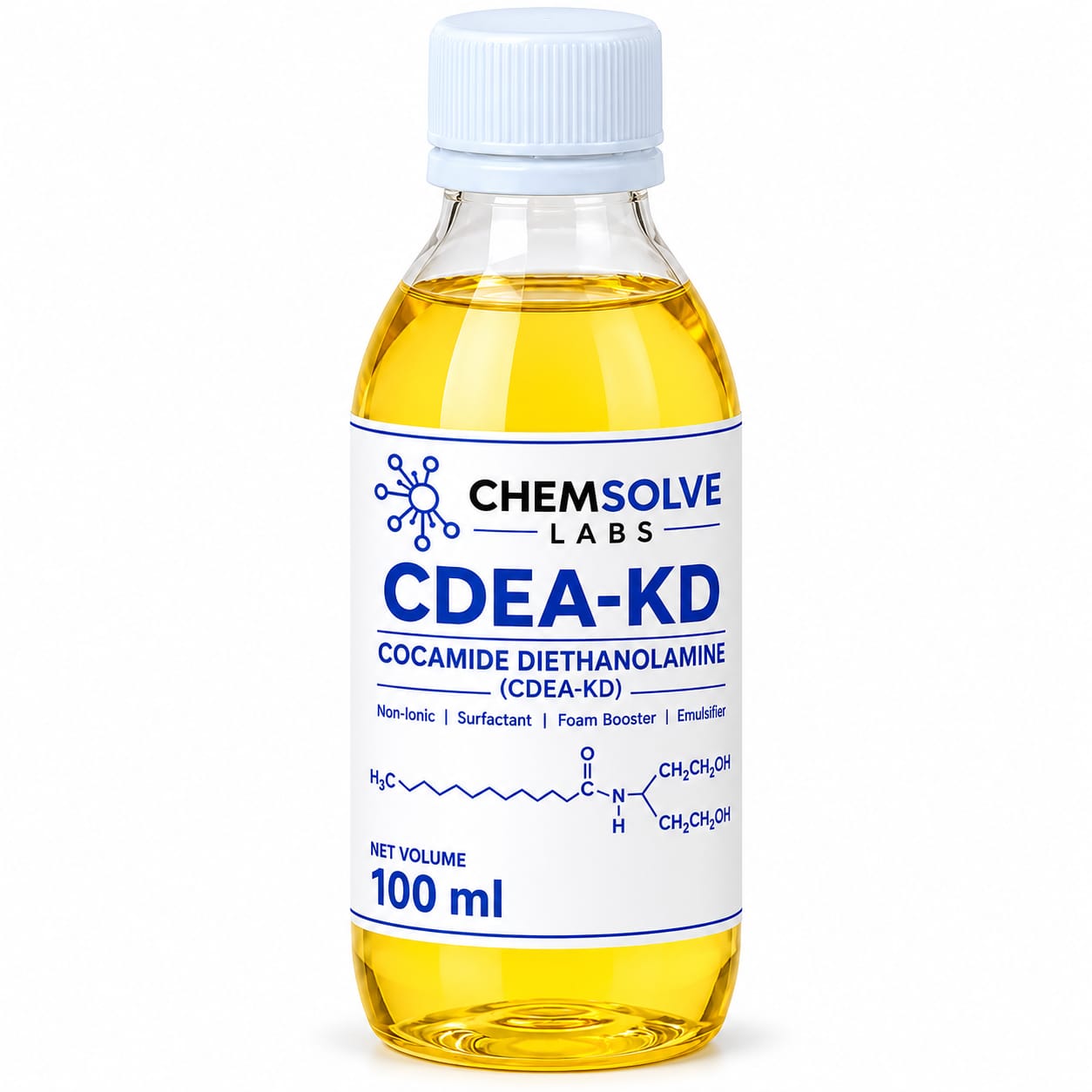
Cocamide DEA (Diethanolamine)
From Rs. 250
View product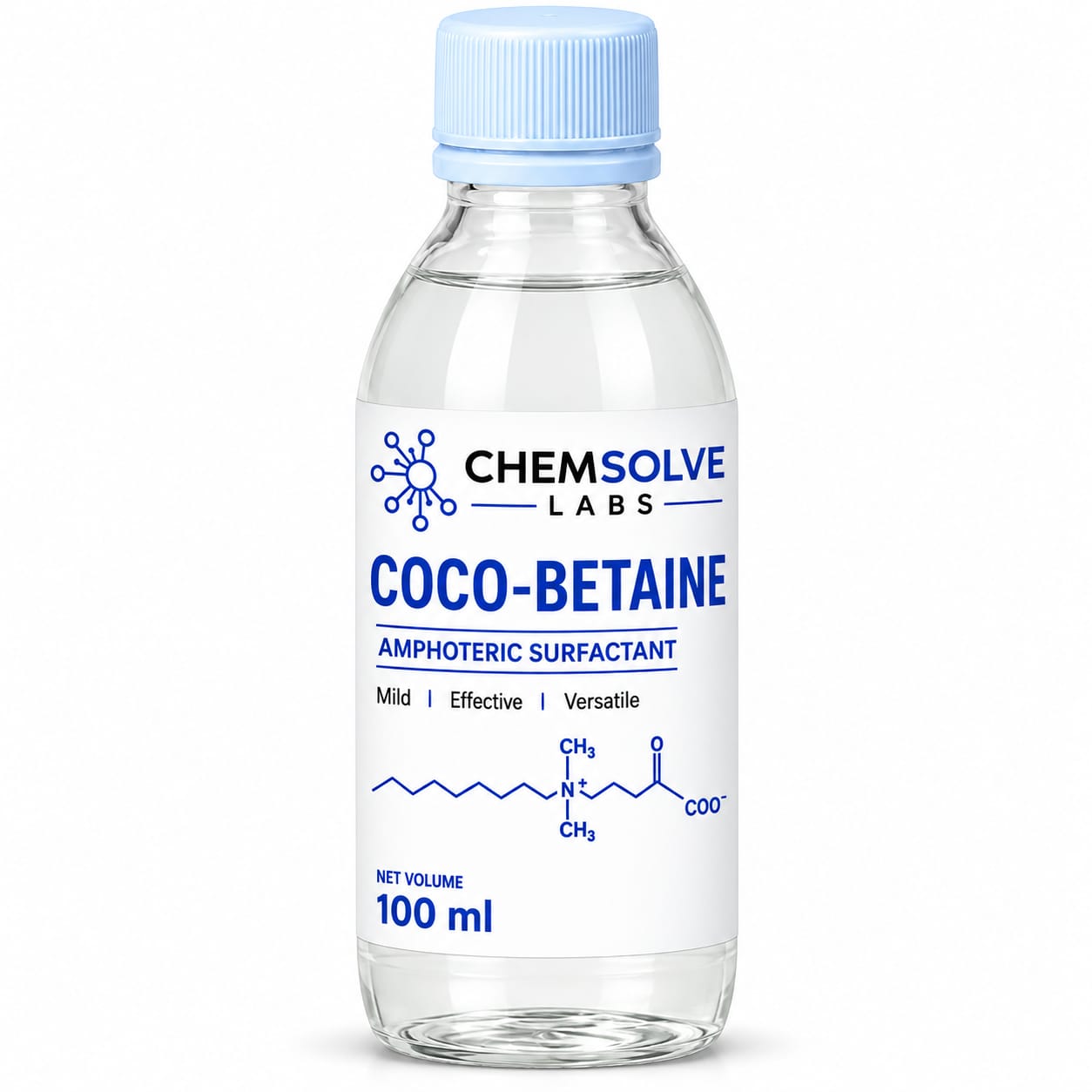
Cocamidopropyl betaine
From Rs. 250
View product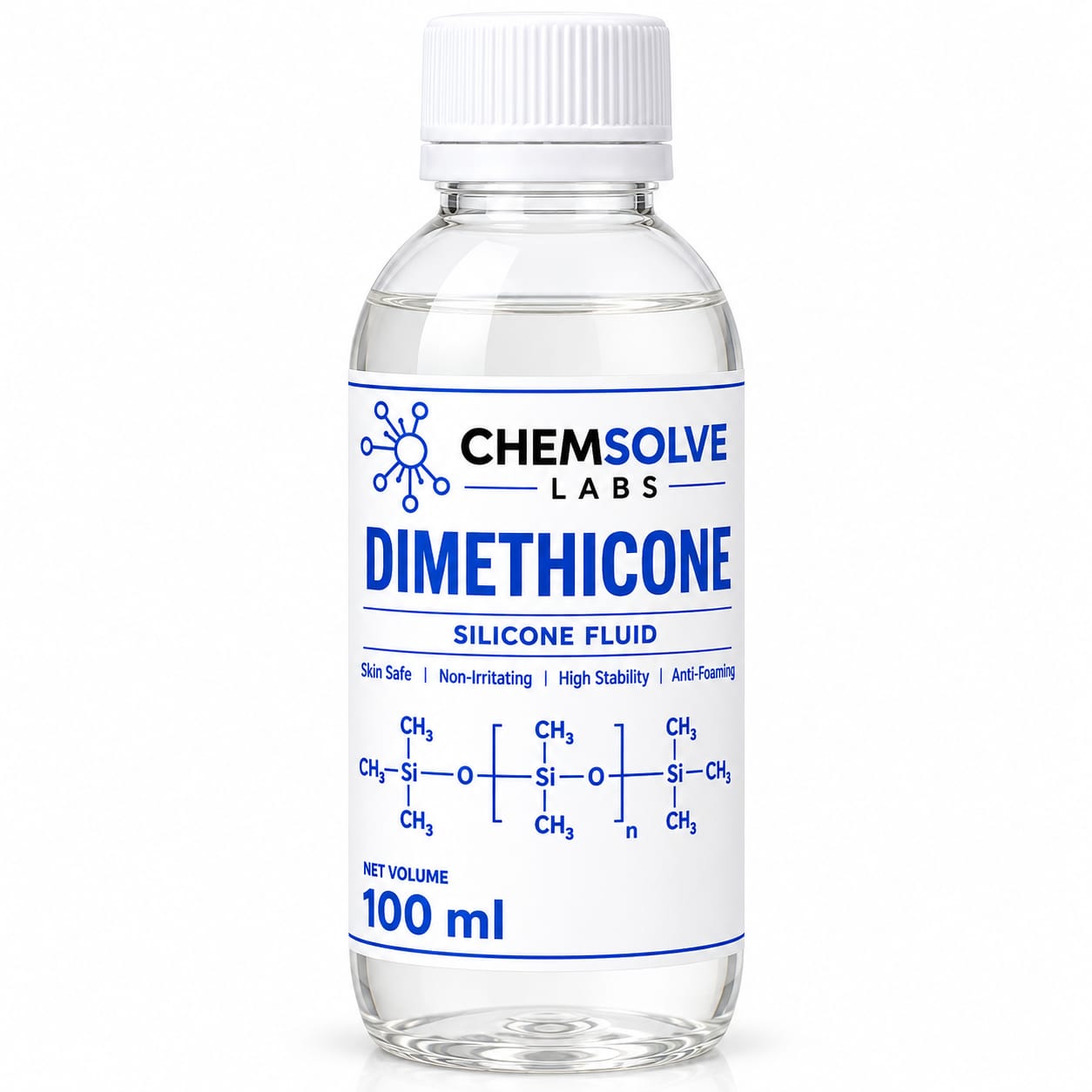
Dimethicone
From Rs. 700
View product
Glycerin
From Rs. 300
View product