Polymer
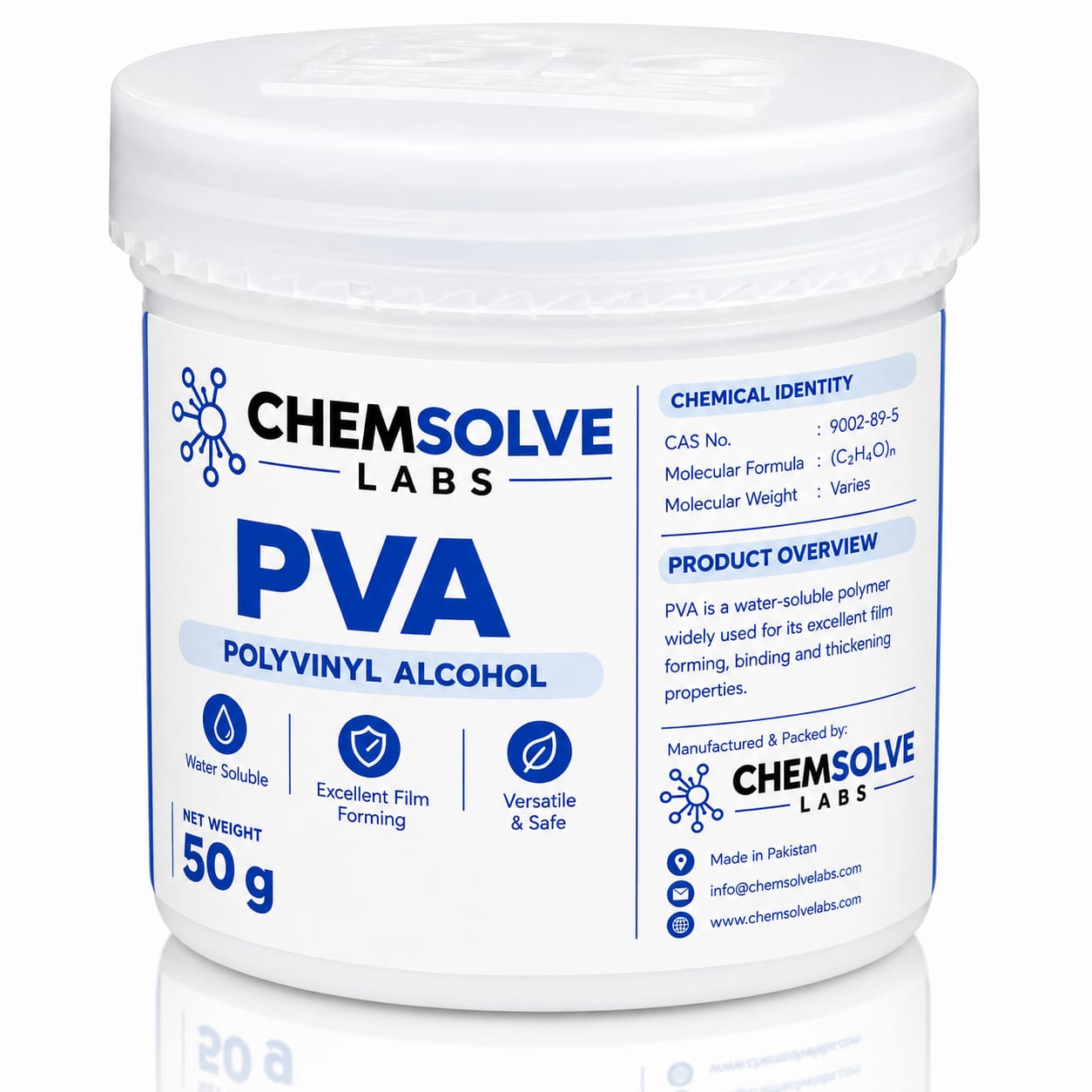
Polyvinyl Alcohol (PVA)
Polyvinyl Alcohol (PVA) is a versatile, water-soluble synthetic polymer widely used in adhesives, coatings, textiles, paper manufacturing, and packaging. It offers excellent film-forming, binding, and adhesive properties, making it suitable for various industrial and polymer applications.
Rs. 180
Shipping Rs. 300 per pack.
Information about Polyvinyl Alcohol (PVA)
🔑 Key Features
• Excellent Film Formation: Produces uniform, flexible polymer films.
• Strong Binding Properties: Improves adhesion and binding in water-based formulations.
• Water Solubility: Dissolves in water according to its grade and degree of hydrolysis.
• Viscosity Modification: Helps control the viscosity of aqueous polymer solutions.
• Versatile Compatibility: Suitable for blending with selected polymers, starches, and cellulose derivatives.
• Wide Industrial Applications: Used in adhesives, textiles, paper coatings, packaging, and polymer research.
🔬 Description
Polyvinyl Alcohol (PVA), also known as PVOH, is a synthetic polymer valued for its film-forming, adhesive, binding, and emulsifying properties. It is produced through the hydrolysis of polyvinyl acetate and is commonly supplied as a white or off-white powder or granules. PVA contains hydroxyl groups along its polymer backbone, allowing hydrogen bonding that contributes to its adhesion and film strength. Its properties depend on molecular weight, viscosity grade, and degree of hydrolysis. In the polymer industry, PVA is widely used in water-based adhesives, textile sizing, paper coatings, protective films, and specialty polymer formulations. It is also used to manufacture water-soluble films for selected packaging applications. Its versatility makes it a valuable raw material for industrial formulation development, laboratory research, and polymer processing.
📊 Technical Data
Property Details
Product Name Polyvinyl Alcohol
Abbreviation PVA / PVOH
CAS Number 9002-89-5
Chemical Formula (C₂H₄O)ₙ, simplified repeat-unit representation
Chemical Class Synthetic polymer
Appearance White to off-white powder or granules
Odor Typically odorless
Solubility Water-soluble; dissolution conditions depend on grade
Main Functions Film formation, binding, adhesion, and viscosity modification
Key Properties Film strength, hydrogen bonding, and adhesion
Industrial Applications Adhesives, textiles, paper, coatings, and packaging
Storage Keep tightly sealed in a cool, dry place
Grade Specifications Confirm viscosity and degree of hydrolysis with the supplier
Note: Exact viscosity, molecular weight, degree of hydrolysis, and dissolution temperature vary by commercial grade. Refer to the supplier's Technical Data Sheet (TDS) and Certificate of Analysis (COA).
💡 Pro Tip
For best results, select PVA according to its degree of hydrolysis and viscosity grade. Partially hydrolyzed grades generally dissolve more readily in cooler water than fully hydrolyzed grades, which commonly require heated water. For powder dissolution, add PVA gradually to water with continuous stirring to minimize lump formation. Follow the supplier's recommended temperature and mixing procedure, and allow sufficient time for complete hydration.
💧 Safety and Regulatory
PVA is widely used in industrial and selected consumer-product applications, but its suitability depends on the specific grade and intended use. Avoid inhaling polymer dust and prevent eye contact during handling. Use suitable protective equipment and consult the supplier's Safety Data Sheet (SDS) for handling, spill response, and first-aid instructions. Store the material in a sealed container away from moisture and contamination. For food-contact, pharmaceutical, medical, or other regulated applications, verify the required grade, applicable standards, and regulatory approvals. Water solubility does not automatically mean that every PVA grade or finished product is biodegradable, environmentally harmless, or suitable for every application.
❓ FAQs
1. What is PVA used for?
PVA is used in adhesives, paper coatings, textile sizing, water-soluble films, polymer blends, and various industrial formulations.
2. Is PVA soluble in water?
Yes. PVA is water-soluble, but the required dissolution temperature and time depend on its molecular weight and degree of hydrolysis.
3. What is the CAS number of PVA?
The commonly used CAS number for polyvinyl alcohol is 9002-89-5.
4. What is the difference between PVA and PVA glue?
PVA refers to the polymer itself, while PVA glue is a formulated adhesive product that may contain water, polymer solids, and other additives.
5. Does PVA increase viscosity?
Yes. PVA can increase the viscosity of aqueous solutions. The effect depends on polymer concentration, molecular weight, degree of hydrolysis, temperature, and other formulation components.
6. Is PVA biodegradable?
Biodegradability varies with the PVA grade, degree of hydrolysis, environmental conditions, and microbial activity. Do not assume that all PVA products biodegrade rapidly under natural conditions.
7. How should PVA be stored?
Store PVA in a tightly closed container in a cool, dry environment, protected from moisture and contamination.
8. Which PVA grade should I choose?
Select the grade based on its viscosity, degree of hydrolysis, dissolution requirements, film properties, and intended application. Consult the supplier's TDS before purchase.
You may also like
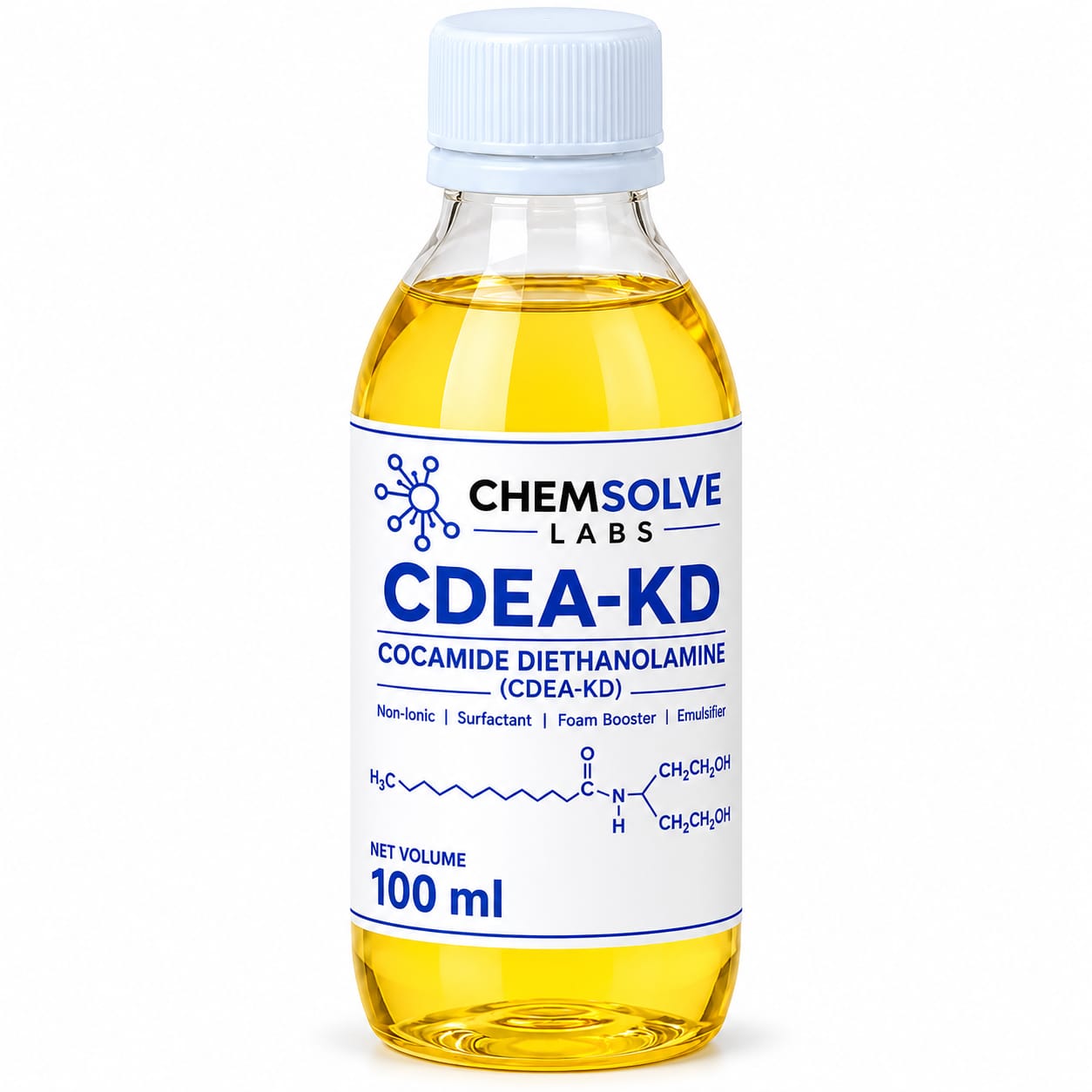
Cocamide DEA (Diethanolamine)
From Rs. 250
View product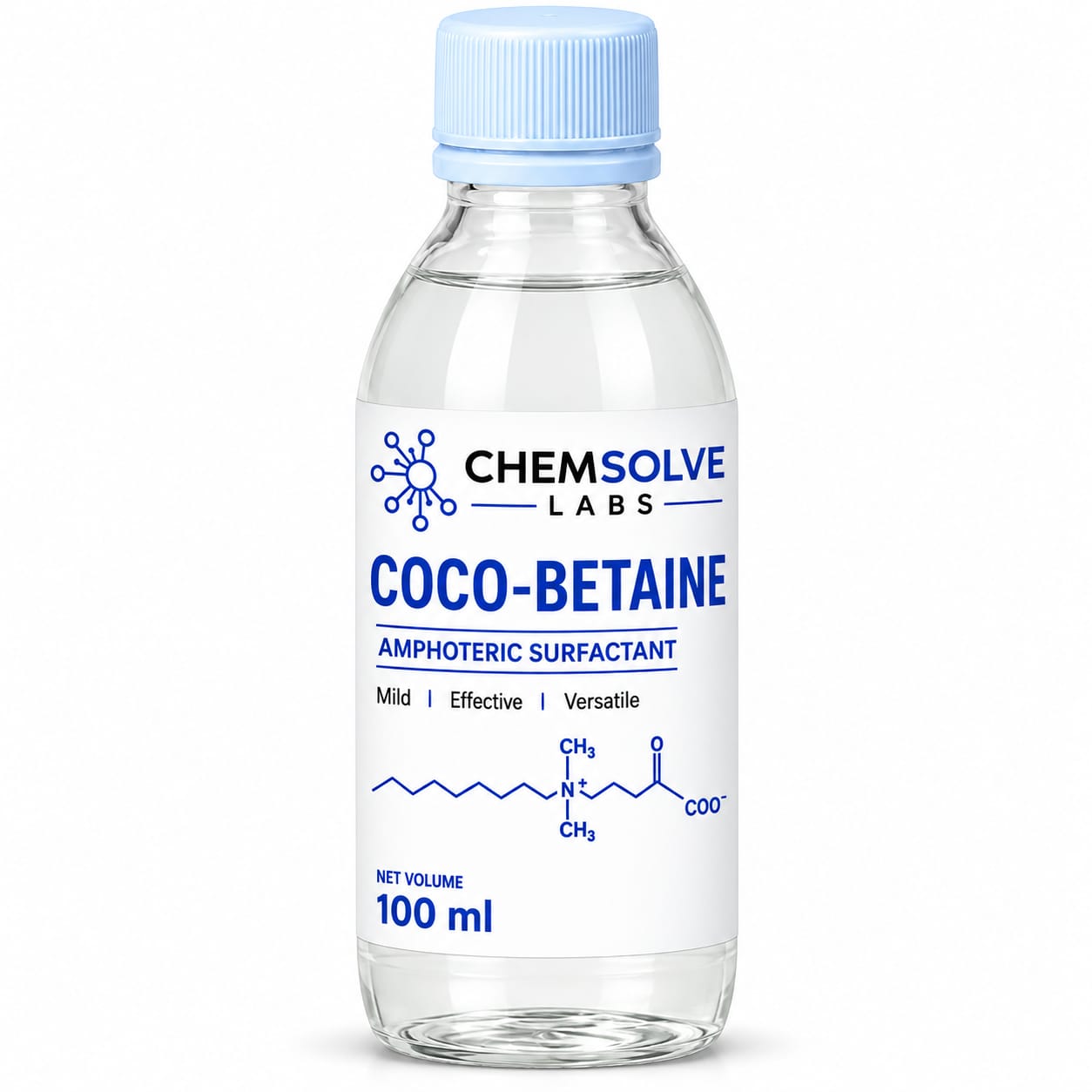
Cocamidopropyl betaine
From Rs. 250
View product
Dimethicone
From Rs. 700
View product
Glycerin
From Rs. 300
View product