
Cosmetic
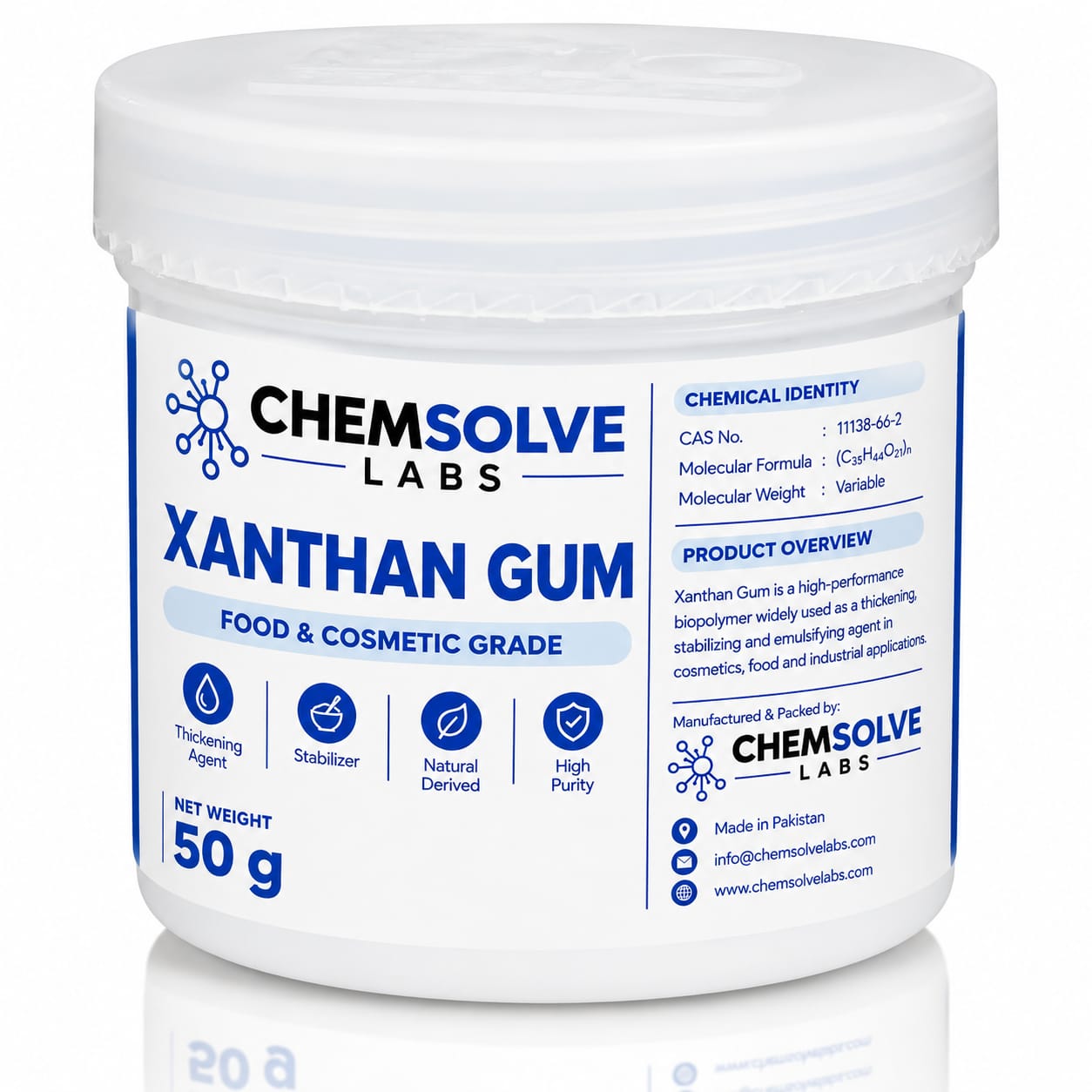
Xanthan Gum
Xanthan Gum is widely used as a natural-origin thickening and stabilizing agent in cosmetics, pharmaceuticals, food, and industrial applications.
Rs. 650
Shipping Rs. 350 per pack.
Information about Xanthan Gum
❓ What Is Xanthan Gum
Xanthan Gum is a naturally derived, high-molecular-weight polysaccharide produced through the fermentation of carbohydrates by the microorganism Xanthomonas campestris. It is widely used in the cosmetic and personal care industries as a thickening agent, stabilizer, and viscosity modifier.
It helps improve the texture, consistency, and stability of cosmetic formulations. Xanthan Gum can produce smooth gels, increase the viscosity of water-based products, and prevent the separation of ingredients in emulsions. It is effective at relatively low concentrations and works in both hot and cold water systems.
🧬 Chemical Structure and Properties
Xanthan Gum is an anionic heteropolysaccharide consisting primarily of repeating sugar units, including:
- D-Glucose
- D-Mannose
- D-Glucuronic acid
- Produces high viscosity at low concentrations.
- Exhibits pseudoplastic (shear-thinning) behavior.
- Stable across a relatively broad pH range.
- Provides excellent suspension and emulsion stabilization.
- Compatible with many surfactants and cosmetic ingredients.
🏭 Uses in the Cosmetic Industry
Xanthan Gum is widely used in skincare, haircare, and personal care formulations.
1. Skincare Products
• Face creams and moisturizers.• Hydrating serums.
• Facial cleansers.
• Aloe vera gels.
• Face masks.
• Sunscreen formulations.
2. Haircare Products
• Shampoos.• Hair conditioners.
• Hair styling gels.
• Hair masks.
• Leave-in conditioners.
3. Personal Care Products
• Body lotions.• Shower gels.
• Liquid soaps.
• Hand washes.
• Shaving creams.
4. Decorative Cosmetics
• Foundation.• Mascara.
• Eyebrow gels.
• Liquid makeup products.
Its primary purpose is to improve viscosity, stabilize emulsions, and provide a consistent product texture.
🔑 Key Features
- Natural-origin polysaccharide thickener.
- Excellent viscosity-building properties.
- Effective at low concentrations.
- Helps prevent ingredient separation.
- Improves product consistency and texture.
- Suitable for hot and cold processing.
- Compatible with many surfactants.
- Provides excellent suspension properties.
- Suitable for water-based formulations.
- •Shear-thinning behavior for easy application.
🔬 Description
Xanthan Gum is a versatile cosmetic-grade biopolymer designed to improve the rheological properties of cosmetic and personal care products. It hydrates in water to form a viscous solution, making it an effective thickening and stabilizing agent.
Its unique molecular structure allows it to maintain viscosity under different temperature and processing conditions. It also helps suspend insoluble particles, pigments, and other ingredients while improving the overall appearance and stability of formulations.
Xanthan Gum is particularly useful in formulations where consistent viscosity, smooth application, and long-term physical stability are required.
📊 Technical Data
Parameter Typical Information
Product Name Xanthan Gum
INCI Name Xanthan Gum
CAS Number 11138-66-2
EC Number 234-394-2
Appearance White to off-white powder
Odor Odorless to slightly characteristic
Solubility Water-soluble
pH (1% solution) Approximately 6.0–8.0
Chemical Type Anionic polysaccharide
Function Thickener, stabilizer, rheology modifier
Processing Hot or cold water
Recommended pH Grade-dependent; commonly suitable around pH 3–11
Typical Use Level 0.1–1.0%
Storage Cool, dry place
Shelf Life Typically 2 years, subject to supplier specifications
Note: These are indicative values. Actual specifications depend on the manufacturer and grade. Always consult the supplier's Technical Data Sheet (TDS) and Certificate of Analysis (COA).
🧪 Recommended Usage
Recommended concentration depends on the desired viscosity and formulation type.
Application Recommended Usage
Facial Serums 0.1–0.3%
Aloe Vera Gel 0.3–0.8%
Face Creams 0.1–0.5%
Body Lotions 0.1–0.4%
Shampoos 0.1–0.5%
Hair Conditioners 0.1–0.3%
Face Wash 0.1–0.4%
Shower Gel 0.1–0.5%
Hair Styling Gel 0.3–1.0%
These are starting formulation ranges, not universal limits.
💡 Pro Tip
For better dispersion and to prevent lump formation, pre-mix Xanthan Gum with glycerin before adding it to water.
Recommended procedure:
1. Weigh the required quantity of Xanthan Gum.
2. Mix it with approximately 3–5 times its weight of glycerin.
3. Add the premix slowly into the water phase under continuous mixing.
4. Continue mixing until uniformly dispersed.
5. Allow sufficient hydration time to develop the desired viscosity.
6. Add remaining ingredients according to their processing requirements.
Formulation tip: Combining Xanthan Gum with Hydroxyethylcellulose (HEC) or other compatible rheology modifiers can help optimize texture and viscosity.
👩🔬Skin Type Suitability
Xanthan Gum is suitable for formulations designed for all skin types.
Skin Type Suitability
Normal Skin Excellent
Dry Skin Excellent
Oily Skin Excellent
Combination Skin Excellent
Sensitive Skin Generally suitable
Mature Skin Suitable
It primarily functions as a thickener and stabilizer rather than an active treatment ingredient.
🧴 Formulation Ideas
Here are some formulation concepts using Xanthan Gum:
1. Hydrating Aloe Vera Gel
• Aloe Vera Juice: 95%
• Glycerin: 3%
• Xanthan Gum: 0.5%
• Preservative: 1%
• Other additives: 0.5%
2. Hydrating Facial Serum
• Distilled Water: 90%
• Glycerin: 3%
• Propanediol: 3%
• Xanthan Gum: 0.3%
• Preservative: 1%
• Other additives: 2.7%
3. Thickening Shampoo
• Distilled Water: 65%
• SLES: 15%
• Cocamidopropyl Betaine: 10%
• Glycerin: 2%
• Xanthan Gum: 0.3%
• Preservative: 1%
• Other ingredients: 6.7%
These are illustrative starting concepts, not validated commercial formulations. Preservative selection, surfactant active matter, pH, compatibility, and stability testing are required. The shampoo formula may need additional viscosity adjustment.
💧 Safety and Regulatory:
Xanthan Gum is widely used in cosmetic and personal care products.
Safety considerations:
• Generally considered suitable for cosmetic applications at normal formulation concentrations.
• Low potential for skin irritation in properly formulated products.
• Avoid inhalation of airborne powder during handling.
• Avoid direct contact with eyes.
• Wear appropriate dust protection when handling large quantities.
• Use cosmetic-grade material with suitable microbiological specifications.
Regulatory information:
Region Information
USA Used in cosmetic formulations; applicable ingredient and product requirements must be followed.
European Union Used in cosmetic products under applicable EU cosmetic legislation.
UK Permitted subject to applicable cosmetic regulations.
Pakistan Use cosmetic-grade material and comply with applicable local cosmetic requirements.
INCI Xanthan Gum
Food Additive E415 (food applications)
Xanthan Gum has also been assessed by the Cosmetic Ingredient Review (CIR) Expert Panel as part of its review of microbial polysaccharide gums.
❓ FAQs
1. What is the main function of Xanthan Gum in cosmetics?
Its primary function is to thicken, stabilize, and improve the texture of cosmetic formulations.
2. Is Xanthan Gum natural?
It is produced through microbial fermentation of carbohydrates and is generally considered a naturally derived biopolymer.
3. Is Xanthan Gum soluble in water?
Yes. It disperses and hydrates in both hot and cold water to form viscous solutions.
4. Can Xanthan Gum be used in shampoo?
Yes. It can increase viscosity and help suspend particles in shampoo formulations.
5. Can Xanthan Gum replace Carbomer?
It can replace Carbomer in certain formulations, but both have different rheological properties and performance characteristics.
6. Can Xanthan Gum be mixed with glycerin?
Yes. Glycerin is commonly used to pre-disperse Xanthan Gum and minimize lump formation.
7. What is the recommended concentration?
Generally, 0.1–1.0% is a useful starting range for cosmetic applications.
8. Does Xanthan Gum help stabilize emulsions?
Yes. It increases the viscosity of the water phase and helps reduce oil-droplet movement and separation.
You may also like
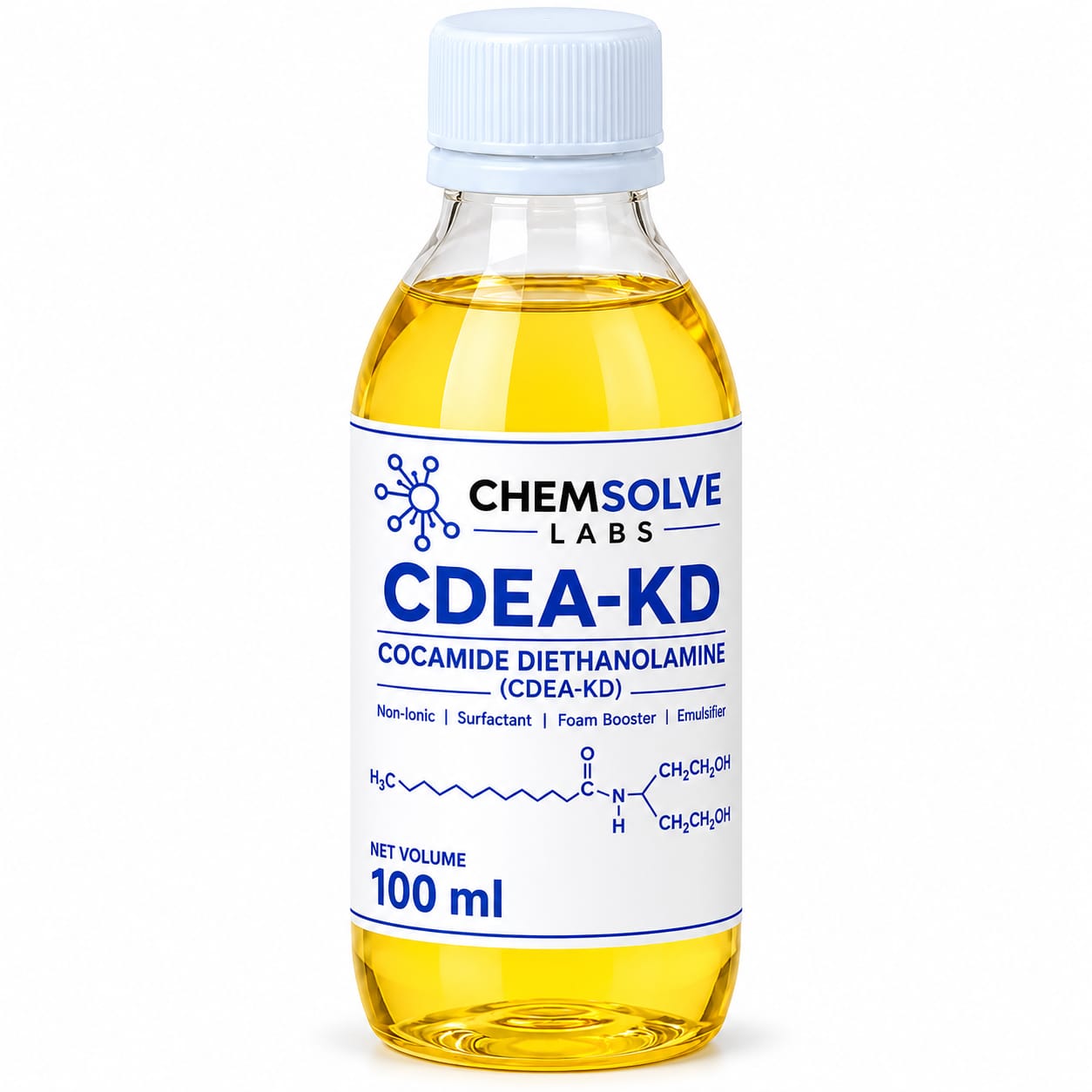
Cocamide DEA (Diethanolamine)
From Rs. 250
View product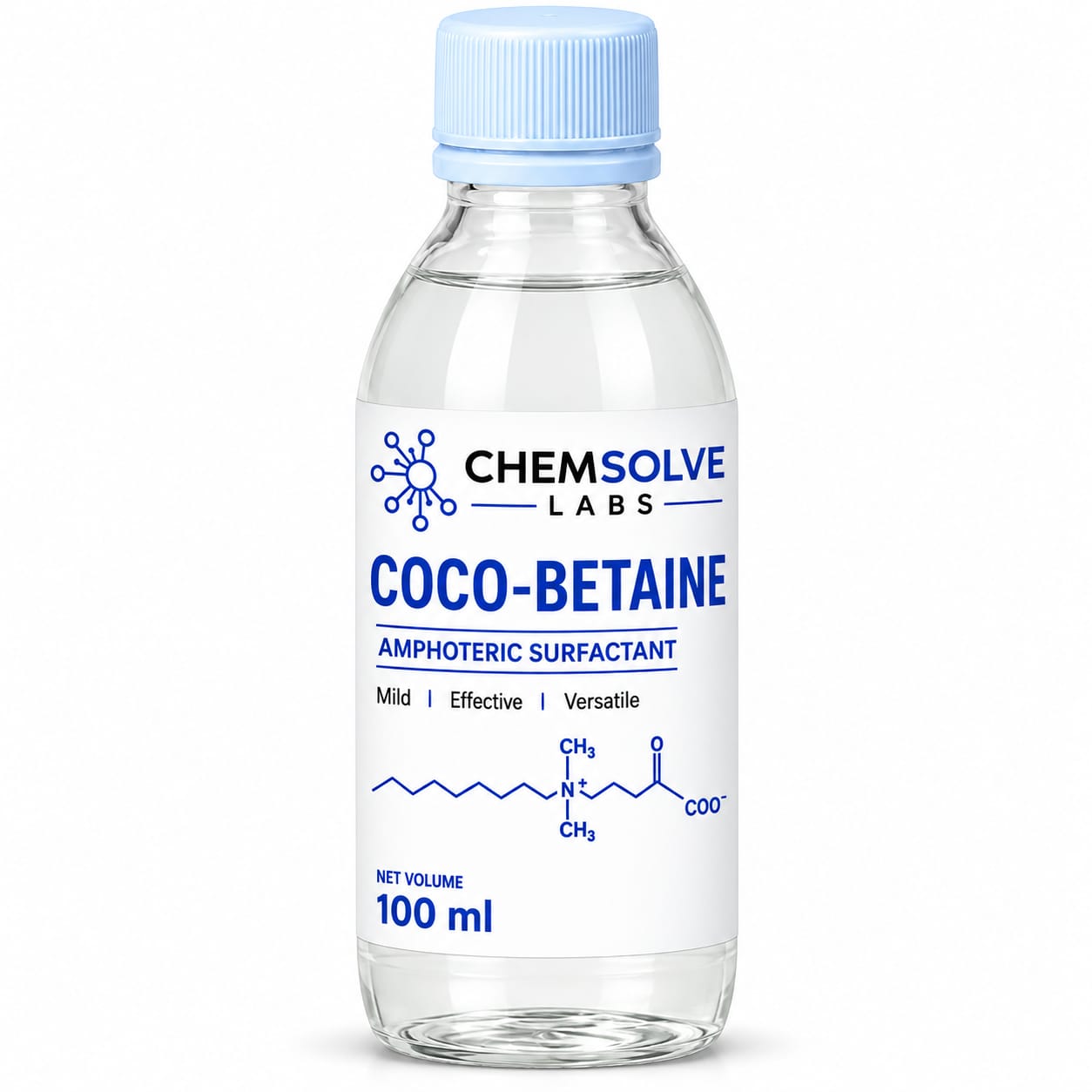
Cocamidopropyl betaine
From Rs. 250
View product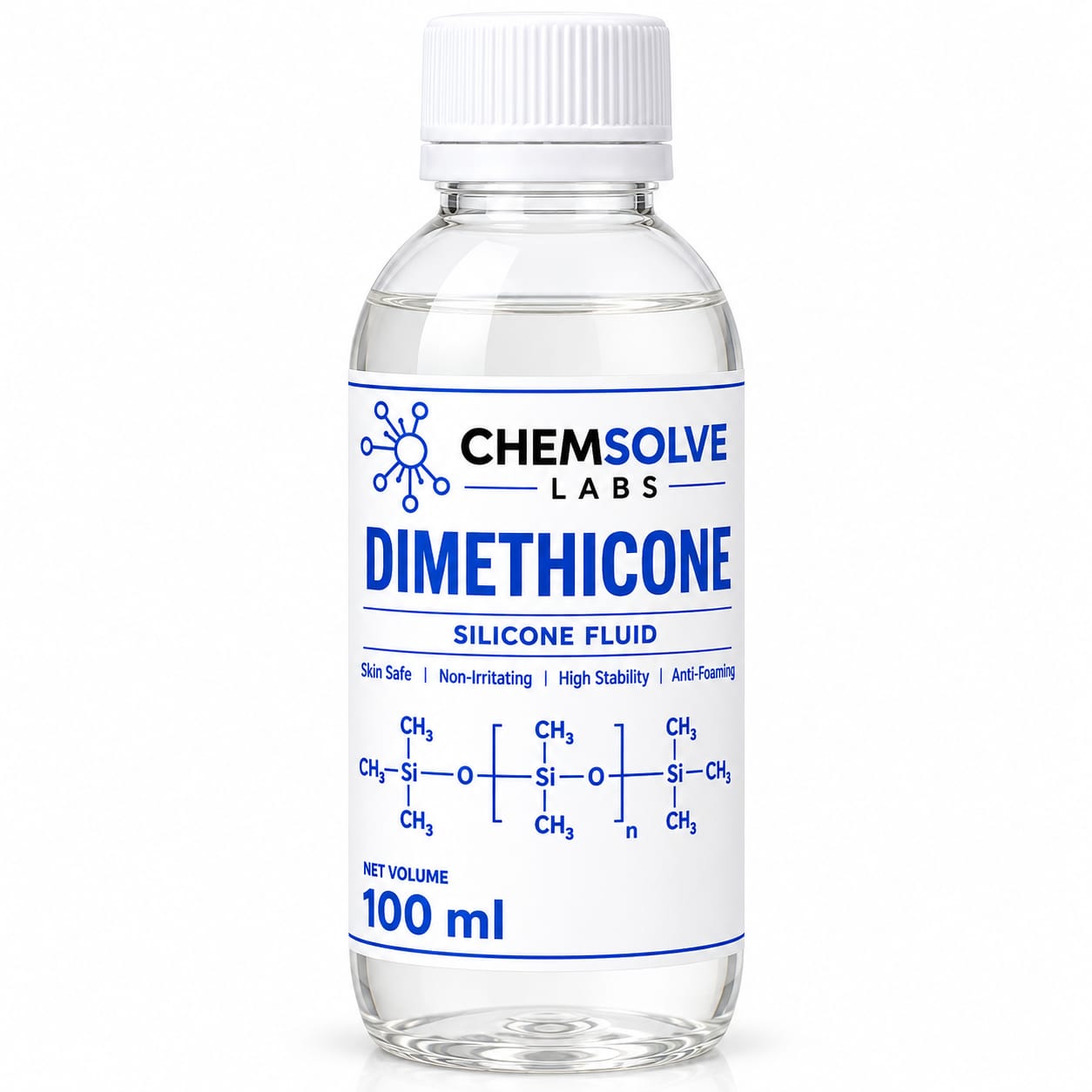
Dimethicone
From Rs. 700
View product
Glycerin
From Rs. 300
View product